What is a traffic source exactly and why is it so important?

No matter how popular or attractive a product may be, it still needs marketing support. What are the most advantageous methods for a given brand? What type of marketing activities yield the best outcomes? Where should resources be devoted? The answer is obvious: to the place where the most people can be reached. And affiliate marketing provides just that! Before you commence with your next campaign, read this article from the MyLead affiliate network to learn why a traffic source is so critical, what free and paid traffic sources are available, how much it costs to acquire traffic, and the advantages of programmatic advertising.
 Prior to selecting between paid or free traffic for your affiliate program, it's important to comprehend the sources of traffic, the differences between paid and free internet traffic, and what they entail. Instances of paid traffic sources used in affiliate marketing are as follows:
 In the realm of affiliate marketing, "free traffic" refers to the acquisition of users through organic means. But what exactly is organic traffic? These are individuals who discover your website in a natural manner, without any direct advertising.
Upon closer examination of the various examples commonly associated with free traffic, it becomes apparent that each of them requires some level of financial investment in order to achieve satisfactory outcomes.
Here are some examples of free traffic (despite their inherent costs):
In the realm of affiliate marketing, "free traffic" refers to the acquisition of users through organic means. But what exactly is organic traffic? These are individuals who discover your website in a natural manner, without any direct advertising.
Upon closer examination of the various examples commonly associated with free traffic, it becomes apparent that each of them requires some level of financial investment in order to achieve satisfactory outcomes.
Here are some examples of free traffic (despite their inherent costs):
 In affiliate marketing, incentive traffic refers to the traffic generated by users who are offered rewards such as cash, gifts, discounts, free ebooks, or game tokens in exchange for visiting specific websites. This type of traffic can effectively attract more visitors to websites and provide valuable user information.
When discussing incentive traffic in affiliate marketing, it's important to mention lead magnets, which are free offerings provided to recipients. If you're interested in learning about different types of lead magnets, what constitutes a successful lead magnet, and how to monetize it, we recommend reading an article from the MyLead affiliate network that talks about this subject.
In affiliate marketing, incentive traffic refers to the traffic generated by users who are offered rewards such as cash, gifts, discounts, free ebooks, or game tokens in exchange for visiting specific websites. This type of traffic can effectively attract more visitors to websites and provide valuable user information.
When discussing incentive traffic in affiliate marketing, it's important to mention lead magnets, which are free offerings provided to recipients. If you're interested in learning about different types of lead magnets, what constitutes a successful lead magnet, and how to monetize it, we recommend reading an article from the MyLead affiliate network that talks about this subject.
 Aside from rapidly boosting your customer acquisition rate, incentive traffic offers additional advantages. It enables you to enhance audience engagement and responsiveness, ultimately leading to increased user interaction. Moreover, a substantial number of downloads and a high customer acquisition rate can have a positive impact on your website's search engine ranking, resulting in greater visibility among users.
While incentive traffic may entice affiliate publishers with its potential for swift user acquisition, it is important to exercise caution. Many advertisers explicitly prohibit this type of traffic. To ensure you promote programs appropriately and avoid any violations, it is crucial to carefully review and adhere to the terms and conditions of each promotion.
Aside from rapidly boosting your customer acquisition rate, incentive traffic offers additional advantages. It enables you to enhance audience engagement and responsiveness, ultimately leading to increased user interaction. Moreover, a substantial number of downloads and a high customer acquisition rate can have a positive impact on your website's search engine ranking, resulting in greater visibility among users.
While incentive traffic may entice affiliate publishers with its potential for swift user acquisition, it is important to exercise caution. Many advertisers explicitly prohibit this type of traffic. To ensure you promote programs appropriately and avoid any violations, it is crucial to carefully review and adhere to the terms and conditions of each promotion.
 The Content Locker tool serves as an illustration of incentive traffic. Referred to as an "empty offer," it enables you to monetize your website by blocking access to a specific section.
The MyLead affiliate network provides four types of Content Lockers at no cost.
For further information on this tool, visit the MyLead blog.
The Content Locker tool serves as an illustration of incentive traffic. Referred to as an "empty offer," it enables you to monetize your website by blocking access to a specific section.
The MyLead affiliate network provides four types of Content Lockers at no cost.
For further information on this tool, visit the MyLead blog.

 In affiliate marketing, free traffic offers a reliable and secure approach, delivering expected results, albeit at a slower pace. It is particularly effective for establishing brand authority and building long-term customer trust.
In contrast, affiliate paid traffic provides a much faster route, albeit at a cost. Paid traffic is ideal for testing sales funnels and generating quick sales.
When selecting the appropriate traffic source in affiliate marketing, it is crucial to align communication channels and marketing tools with your specific needs and goals. While return on investment serves as a common objective for many entrepreneurs, the strategies employed to achieve these goals can greatly differ.
Ensure that you seek out solutions that align with your capabilities, taking into account both your financial resources and time constraints. Explore all available opportunities to optimize your profits and secure a consistent flow of traffic and potential customers for the products you promote.
What strategies can be employed to enhance the quality of traffic in affiliate marketing?
In affiliate marketing, free traffic offers a reliable and secure approach, delivering expected results, albeit at a slower pace. It is particularly effective for establishing brand authority and building long-term customer trust.
In contrast, affiliate paid traffic provides a much faster route, albeit at a cost. Paid traffic is ideal for testing sales funnels and generating quick sales.
When selecting the appropriate traffic source in affiliate marketing, it is crucial to align communication channels and marketing tools with your specific needs and goals. While return on investment serves as a common objective for many entrepreneurs, the strategies employed to achieve these goals can greatly differ.
Ensure that you seek out solutions that align with your capabilities, taking into account both your financial resources and time constraints. Explore all available opportunities to optimize your profits and secure a consistent flow of traffic and potential customers for the products you promote.
What strategies can be employed to enhance the quality of traffic in affiliate marketing?

What is a traffic source exactly and why is it so important?
For an affiliate marketing campaign to be successful, it is necessary to redirect potential customers to the advertiser's product page. This is typically done through a platform of some kind. Although traditionally it is assumed that an affiliate must have their own website from which to direct traffic, many use social media profiles as well. So why is traffic source so important in affiliate marketing? To increase the reach of the product, it is necessary to "attract" customers to the product page with free or paid internet traffic. However, the number of people viewing the product page is not the only factor. Different types of traffic will bring in different groups of people, some of whom will convert into customers - whether by subscribing to a newsletter or buying a product. Developing a traffic source and ensuring high-quality traffic takes effort and sometimes money. But it is the source of traffic that will determine the success of the affiliate marketing campaign.Paid affiliate traffic sources
For an affiliate marketing campaign to be successful, it is necessary to redirect potential customers to the advertiser's product page. This is typically done through a platform of some kind. Although traditionally it is assumed that an affiliate must have their own website from which to direct traffic, many use social media profiles as well. So why is traffic source so important in affiliate marketing? To increase the reach of the product, it is necessary to "attract" customers to the product page with free or paid internet traffic. However, the number of people viewing the product page is not the only factor. Different types of traffic will bring in different groups of people, some of whom will convert into customers - whether by subscribing to a newsletter or buying a product. Developing a traffic source and ensuring high-quality traffic takes effort and sometimes money. But it is the source of traffic that will determine the success of the affiliate marketing campaign.Paid affiliate traffic sources
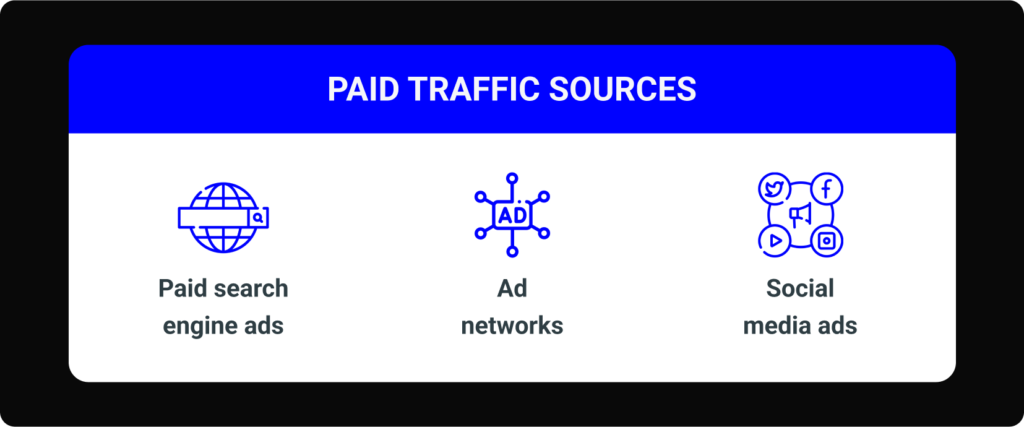
Prior to selecting between paid or free traffic for your affiliate program, it's important to comprehend the sources of traffic, the differences between paid and free internet traffic, and what they entail. Instances of paid traffic sources used in affiliate marketing are as follows:
- paid ads in the search engine - by clicking on a link that was designed to look like a search result, the user arrives at the website,
- advertising networks - upon discovering a banner, display, or push advertisement, the user can be taken to the landing page after clicking,
- paid ads in social media - after seeing ads on Facebook or Instagram, users are taken to the landing page.
Paid traffic work in affiliate marketing - is it a good match?
When it comes to affiliate marketing, paid traffic is often utilized in formats such as CPM (Cost Per Mille) or PPC (Pay Per Click), where advertisers pay for each impression or click their ad receives. Thankfully, programmatic advertising allows for more precise budget allocation, specifically targeting audiences that align with desired criteria. Consequently, advertisers only incur expenses for traffic that delivers the following:- the intended recipients they aimed to reach.
- recipients who display genuine interest in the promoted product.
- recipients who are motivated to make a purchase.
Benefits of PPV/CPM Campaigns and Programmatic Advertising
Understanding the source of consumer traffic is crucial for the success of affiliate marketing. It enables you to create a recipient profile, analyze their behavior, optimize promotional activities, and measure their effectiveness and efficiency. Programmatic advertising platforms specialize in providing such solutions. Through self-serve advertising platforms, advertisers have complete control over:- Timing and frequency - advertisements can be scheduled with precision down to individual hours of the day and frequency in minutes.
- Targeting location - advertisements can be targeted to specific countries, regions, or cities.
- Ad formats - platforms offer a variety of advertising formats, ranging from traditional banner/display ads to highly effective push ads.
- Audience segmentation - ads can be tailored based on user activity and behavior.
What does free traffic entail and what are the true expenses in affiliate marketing?
In the realm of affiliate marketing, "free traffic" refers to the acquisition of users through organic means. But what exactly is organic traffic? These are individuals who discover your website in a natural manner, without any direct advertising.
Upon closer examination of the various examples commonly associated with free traffic, it becomes apparent that each of them requires some level of financial investment in order to achieve satisfactory outcomes.
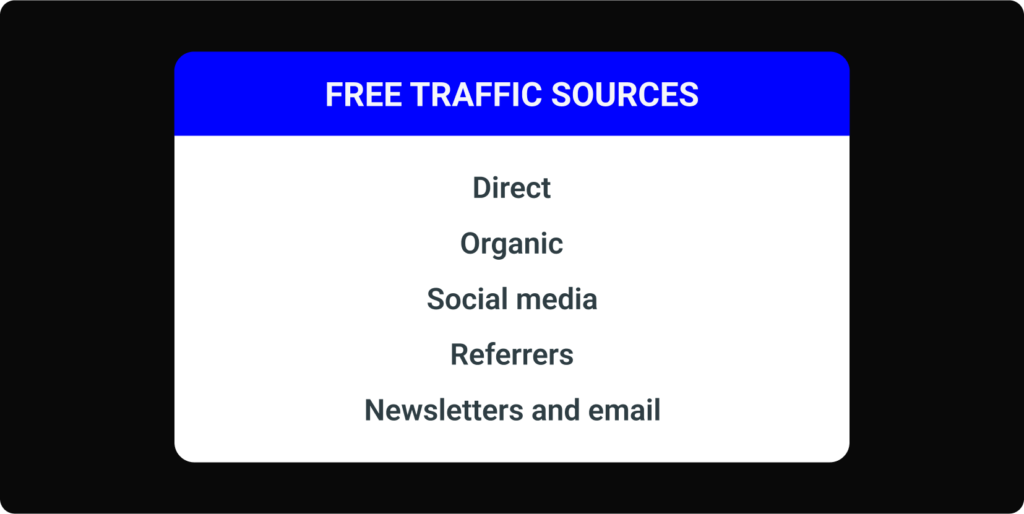
Here are some examples of free traffic (despite their inherent costs):
- Direct traffic (users visit the website by directly entering the URL, such as https://mylead.global/en) - while relying solely on direct traffic takes time for the promoted product to gain recognition, it necessitates investment in advertising campaigns to establish that recognition.
- Organic traffic (users find the website by selecting search results, e.g., through Google) - in order for a user to discover your website through search results, it must rank high enough. However, achieving a high ranking becomes increasingly challenging in highly competitive markets, requiring greater financial investment.
- Social media (users are directed to the product page via posts on platforms like Facebook, Instagram, Twitter, or TikTok) - the creation and dissemination of these posts ideally requires an individual or influencer with a substantial reach. While it is possible to build reach on your own, it demands both time and financial resources.
- Referrals (users access the site through links placed on other websites) - referrals can serve as a valuable addition to your affiliate traffic sources, but they can also be a marketer's nightmare. Acquiring links from high-quality domains is no easy task, and links from domains with lower authority can potentially harm your efforts.
- Email/newsletter (users have subscribed or agreed to join a contact database to receive promotional content through this channel) - this approach relies on previous promotional activities or purchasing space in someone else's newsletter.
What does incentivized traffic mean in affiliate marketing?
In affiliate marketing, incentive traffic refers to the traffic generated by users who are offered rewards such as cash, gifts, discounts, free ebooks, or game tokens in exchange for visiting specific websites. This type of traffic can effectively attract more visitors to websites and provide valuable user information.
When discussing incentive traffic in affiliate marketing, it's important to mention lead magnets, which are free offerings provided to recipients. If you're interested in learning about different types of lead magnets, what constitutes a successful lead magnet, and how to monetize it, we recommend reading an article from the MyLead affiliate network that talks about this subject.
Aside from rapidly boosting your customer acquisition rate, incentive traffic offers additional advantages. It enables you to enhance audience engagement and responsiveness, ultimately leading to increased user interaction. Moreover, a substantial number of downloads and a high customer acquisition rate can have a positive impact on your website's search engine ranking, resulting in greater visibility among users.
While incentive traffic may entice affiliate publishers with its potential for swift user acquisition, it is important to exercise caution. Many advertisers explicitly prohibit this type of traffic. To ensure you promote programs appropriately and avoid any violations, it is crucial to carefully review and adhere to the terms and conditions of each promotion.
The Content Locker tool serves as an illustration of incentive traffic. Referred to as an "empty offer," it enables you to monetize your website by blocking access to a specific section.
The MyLead affiliate network provides four types of Content Lockers at no cost.
For further information on this tool, visit the MyLead blog.
Paid Traffic vs Free Traffic - Choosing the Optimal Traffic Source for Affiliate Marketing
By now, you are familiar with the concepts of free traffic and paid traffic in affiliate marketing. Beyond understanding their definitions, it is valuable to determine which type of traffic is more effective when it comes to promoting affiliate campaigns.
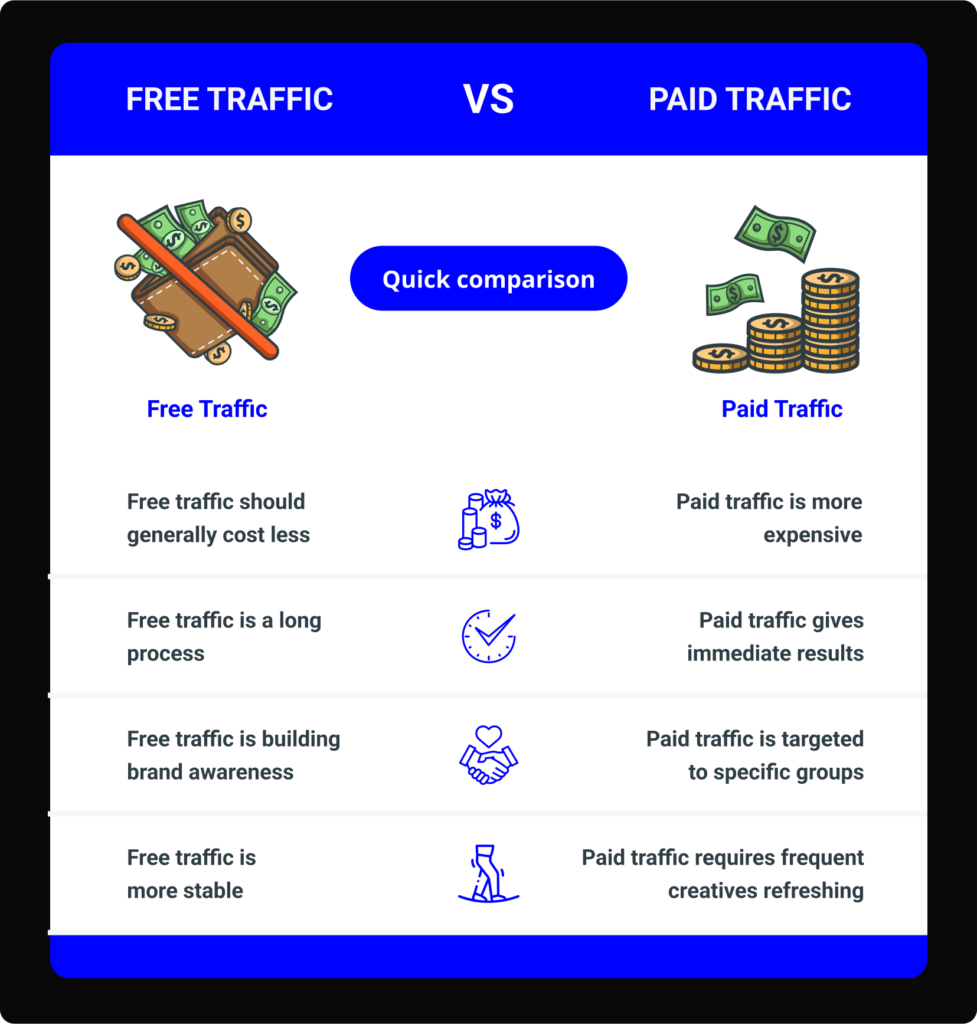
In affiliate marketing, free traffic offers a reliable and secure approach, delivering expected results, albeit at a slower pace. It is particularly effective for establishing brand authority and building long-term customer trust.
In contrast, affiliate paid traffic provides a much faster route, albeit at a cost. Paid traffic is ideal for testing sales funnels and generating quick sales.
When selecting the appropriate traffic source in affiliate marketing, it is crucial to align communication channels and marketing tools with your specific needs and goals. While return on investment serves as a common objective for many entrepreneurs, the strategies employed to achieve these goals can greatly differ.
Ensure that you seek out solutions that align with your capabilities, taking into account both your financial resources and time constraints. Explore all available opportunities to optimize your profits and secure a consistent flow of traffic and potential customers for the products you promote.
What strategies can be employed to enhance the quality of traffic in affiliate marketing?
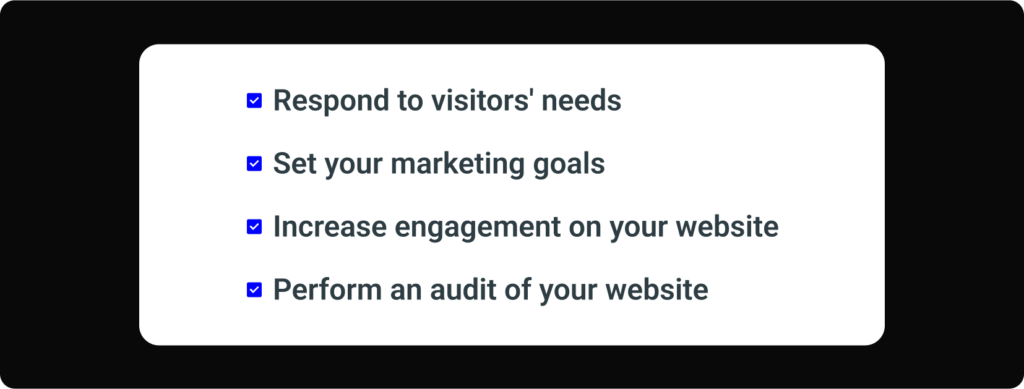
Address visitors' needs
To improve the quality of traffic in your affiliate marketing efforts, it's crucial to understand your audience's intentions. Ensure your website caters to their needs by optimizing it to effectively convert visitors. Use keywords that align with their interests and search queries.Define marketing goals
The quality of your traffic relies on the marketing goals you set. Invest in creating relevant and valuable content that attracts and retains both new and existing visitors. Align your content strategy with your desired outcomes to maximize the effectiveness of your traffic.Boost website engagement
While attracting a high volume of visitors is important, it's equally crucial to engage them and convert their visits into revenue-generating actions. Increase engagement on your website by providing compelling and pertinent content, actively seeking customer opinions, conducting research and testing, optimizing for search engines (SEO), and engaging in interactive communication with your visitors.Conduct website audits
Performing regular website audits can significantly boost your website's traffic. The MyLead affiliate network offers comprehensive website analysis services that provide tailored suggestions to enhance your profitability. Remember, receiving the analysis results does not obligate you to implement the recommended changes.