Virtual cards for ads and team budget management: how to choose a reliable provider
Reasons for payment declines
Traffic sources tighten their policies almost daily. Media buying teams literally fight for stable traffic without creative rejections, account bans, and business manager restrictions. In addition, other issues may arise such as payment declines, which also stop traffic and affect performance. As a result, tests slow down, budgets get stuck, and scaling becomes unstable.
Main reasons for payment declines
• BIN mismatch with the ad platform requirements
• Using one card across multiple ad accounts
• Sudden increase in spend without payment history
• Issues with payment confirmation
• GEO mismatch between the account, card, and traffic
• Internal limits and restrictions from the bank or payment provider
The difference between bank cards and virtual cards
Why regular bank cards are poorly suited for media buying
The concept of a bank card does sound trustworthy, as it is associated with structure and stability. However, classic debit cards are not designed for intensive work with ad networks. When the same card is used across multiple ad accounts, any decline or block can trigger a chain reaction, stopping several campaigns at once and even leading to account losses.
Banks make it difficult to get unlimited card issuance. In addition, due to bureaucracy, cards are not issued whenever you need them. Multiple operations with cards also raise many questions from cardholders, and financial monitoring may become interested in large turnovers.
Also, topping up cards through a bank is usually limited to cash or bank transfer and is often restricted by currency limitations.
What virtual cards are and why they are suitable for ad platforms
Virtual cards are a digital payment instrument that can be issued instantly and used for both online and offline payments. They can be topped up in any convenient way, including crypto, without leaving any personal data. Payments with virtual cards can process any amounts, and they work stably and reliably.
Another benefit of using virtual cards for media buying and agency work is the ability to create separate cards for each ad account or project. There are no issuance limits, so any blocked card can be immediately replaced with a new one.
Advantages of virtual cards
A separate card for each ad account
As mentioned earlier, using virtual cards allows you to isolate risks. If one card gets declined or blocked, the other ad accounts continue to work without interruptions. This is especially important when scaling and working simultaneously with multiple traffic sources.
BIN and payment stability
BIN affects how ad platforms classify a card. Some BINs pass moderation more easily and payments are more stable in specific GEOs or ad networks. Managing BINs allows you to build a more stable payment infrastructure. Virtual card providers offer different BINs without being limited to a single GEO. FuncCards provides exclusive BINs that ensure stable card performance on platforms such as Google, Facebook, and TikTok.
Limit control and security
Virtual cards allow you to set spending limits, which reduces the risks of budget overspending, media buyer mistakes, or fraud. This is especially relevant for teams with multiple account managers.
Team budget management
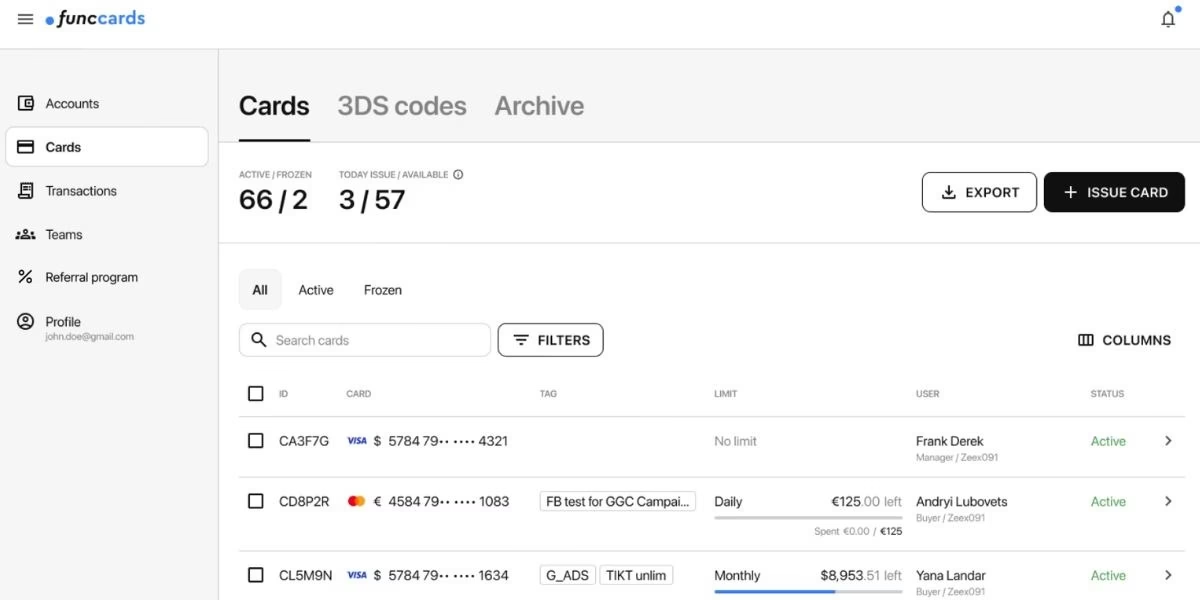
In payment services, an account is created for each user, where they can control their expenses. FuncCards listens to its clients and releases product updates every month to make payment control for media buying teams even more convenient and efficient.
Sub accounts for teams and projects
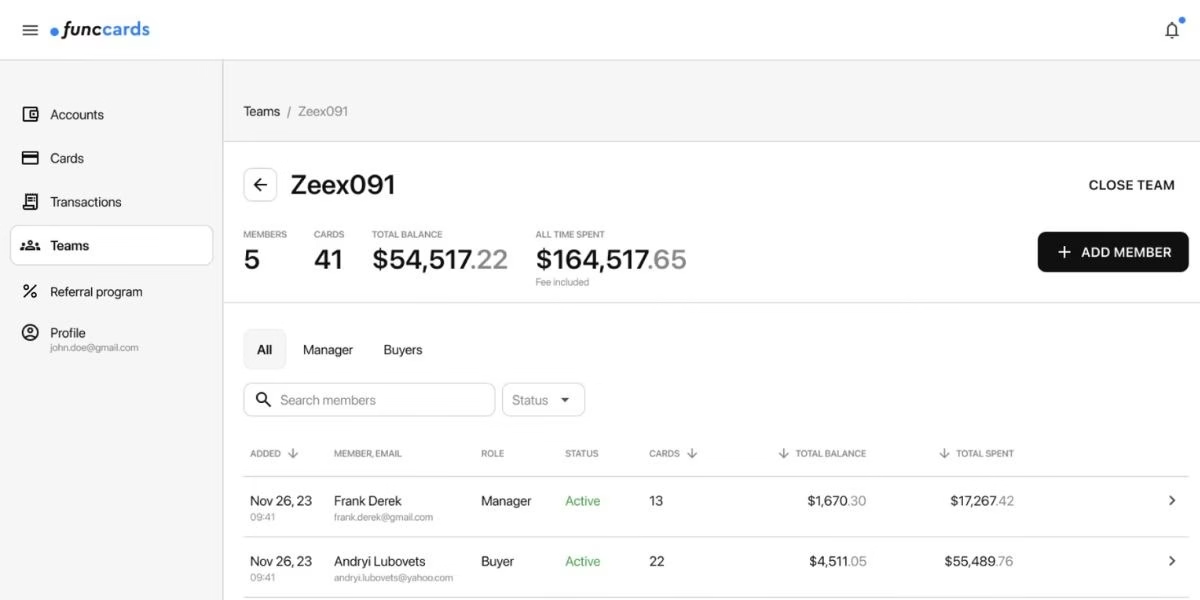
Sub accounts allow budgets to be separated by projects, teams, or directions. For example, you can create a separate sub account for Facebook, another one for TikTok or Google Ads, and also allocate budgets for different funnels or GEOs. This approach simplifies expense tracking, increases the transparency of financial flows, and helps evaluate the performance of each channel more accurately.
Access control
Access to cards and balances can be granted only to specific employees, with limited permissions. Some users can issue cards, some can top up balances, and others can only view transactions. This reduces operational risks, helps avoid mistakes, and simplifies internal control in teams with multiple media buyers and managers.
Unified balance and fund distribution
Having a unified balance for a team allows budgets to be quickly redistributed between projects without constant manual top ups for each individual card. This saves time, simplifies cash flow management, and reduces the risk of ad campaign downtime due to funding delays.
Additional capabilities of working with FuncCards
FuncCards offers solutions for media buying teams and businesses that work with large budgets and a high volume of payments. The service provides a unified balance and sub accounts for teams, unlimited virtual card issuance, roles with flexible access rights, and spending control for each user. This allows centralized financial management for teams and fast scaling of ad launches without operational limitations.
Payment for services and subscriptions
FuncCards virtual cards are suitable for paying for SaaS services, work tools, subscriptions to trackers, proxies, antidetect browsers, hosting, and other services required for working with traffic and online businesses. Cards are stably accepted by international platforms and allow payments to be separated by projects or teams.
Referral program
FuncCards offers a referral program for all clients. After registration, a personal referral link is available in the user account. You invite friends and partners and receive additional income from their top ups. The referral program is suitable for both individual users and teams and partners.
Support
FuncCards users have access to support. B2B clients are assigned a dedicated account manager who helps with onboarding, account setup, BIN selection for specific tasks, and resolving non standard cases. Support is available via Telegram and responds promptly to requests.
Virtual cards are not just a way to pay for ads, but a full featured financial management tool for media buying teams and agencies.